Sleep apnoea · Brussels

CPAP machine in Brussels: rental, purchase and follow-up.

CPAP (continuous positive airway pressure) is the reference treatment for moderate to severe sleep apnoea. At the CIRCAE sleep centre in Woluwe-Saint-Lambert, we support you from prescription to follow-up: choice of device, rental or purchase, mask fitting and regular check-ups with our sleep technician.

Cécile Vanholsbeeck, sleep and CPAP technician at the CIRCAE centre in BrusselsCécile VanholsbeeckSleep technician · CPAP

At CIRCAE

The benefits

What CPAP changes

·

Stops apnoeas and snoring

·

Restores refreshing sleep

·

Less tiredness and daytime sleepiness

·

Protects your heart and blood vessels

Understanding

What is a CPAP machine?

With sleep apnoea, the throat relaxes and closes during sleep: breathing stops, oxygen drops and the brain briefly wakes up to restart it, sometimes hundreds of times a night. A CPAP machine delivers, through a tube and a mask, a gentle flow of pressurised air that keeps the airway open. The apnoeas disappear, so does the snoring, and sleep becomes continuous and deep again.

The treatment is prescribed by a sleep physician after a sleep study (polygraphy or polysomnography). It is used every night, at home as well as when travelling. Many patients feel a clear improvement within the first weeks.
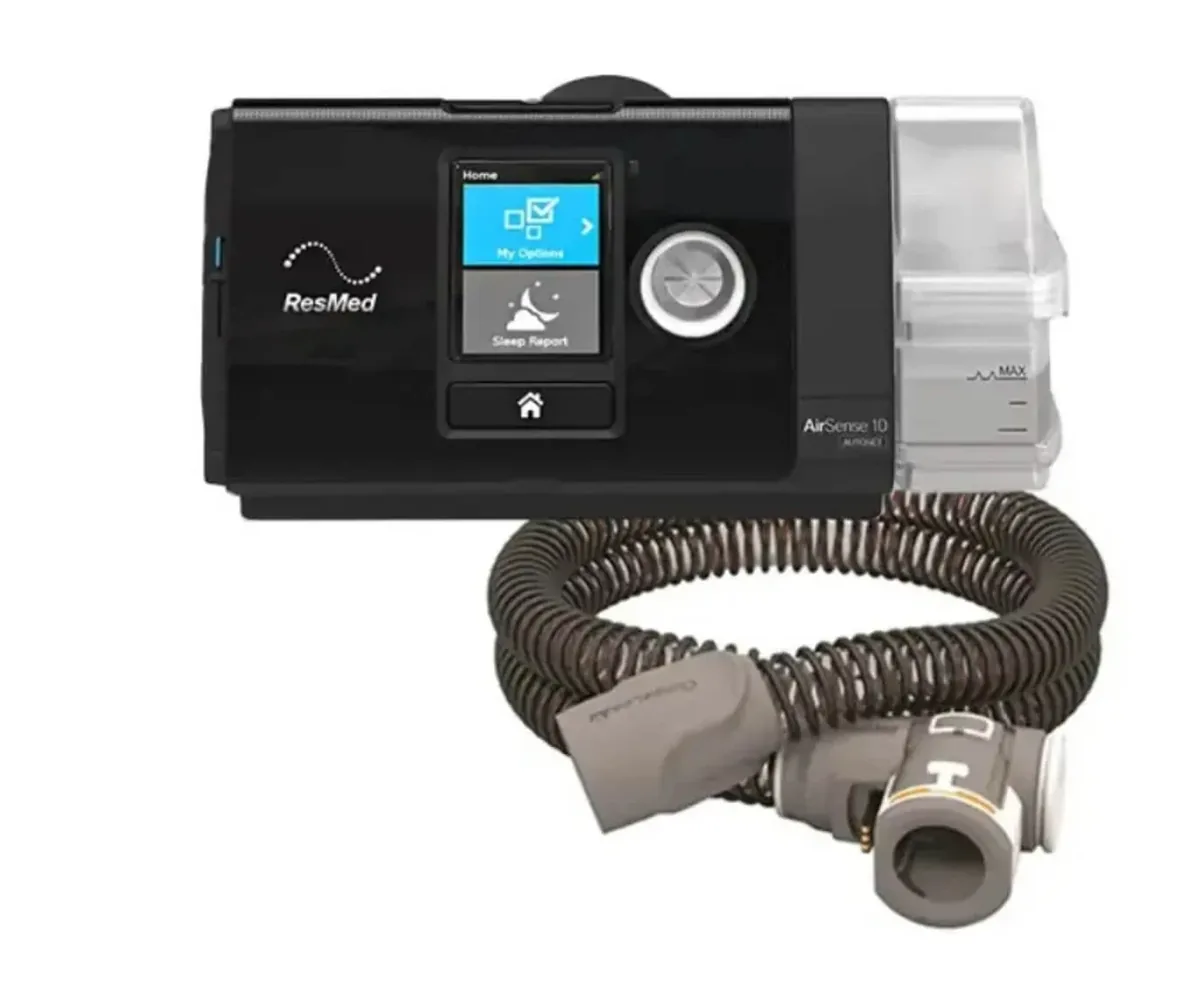
ResMed AirSense 10 AutoSet CPAP machine with humidifier and heated tube
Why treat

The risks of untreated sleep apnoea

Sleep apnoea is more than a snoring problem. Left untreated, it strains the body night after night and increases the risk of several diseases. CPAP acts directly on the cause: the breathing pauses.

Heart and blood pressure

Cardiovascular

Hard to control high blood pressure, heart rhythm disorders (including atrial fibrillation), heart attack and heart failure are more frequent with untreated apnoea.

Brain

Neurological

Higher risk of stroke, memory and concentration problems, irritability and low mood.

Metabolism

Weight and diabetes

Apnoea promotes insulin resistance, type 2 diabetes and weight gain, which in turn worsens the apnoeas.

Sleepiness

Daily life

Falling asleep involuntarily, at the wheel or at work, with a much higher risk of accidents. Tiredness on waking and morning headaches.
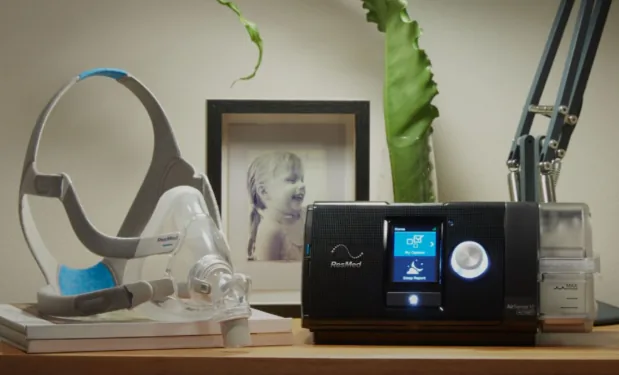
ResMed CPAP machine on a bedside table next to an AirFit mask
Comfort

A treatment designed for your nights

Today's machines are compact, quiet and very comfortable. Settings are tailored to you, and our technician fine-tunes them during follow-up.

  • Auto-adjusting pressure: the machine adapts the pressure, breath by breath, to what you need.
  • Gentle start: the pressure rises gradually while you fall asleep.
  • Easier exhalation: the pressure drops slightly when you breathe out.
  • Heated humidifier and tube: no dry nose or mouth, no condensation.
  • Quiet: a soft airflow, often more discreet than the snoring it stops.
  • Night tracking: the machine records use and effectiveness; an app lets you follow your nights.
The models

Which CPAP machine?

We work with ResMed devices, among the most widely used in the world. The model is chosen with you according to the prescription, your comfort and your habits, especially if you travel often.

ResMed AirSense 11 AutoSet

Auto-adjusting · Latest generation

Auto-adjusting pressure, touchscreen, built-in humidifier and guidance during the first nights. The comfort choice for everyday use.

ResMed AirSense 10 AutoSet

Auto-adjusting · Proven

A reference device for years, reliable and quiet, with heated humidifier and optional heated tube.

ResMed AirSense Elite

Fixed pressure

A constant pressure set by the physician. Suited when the pressure you need is stable from night to night.

ResMed AirMini

Travel device

Very small and light, it fits in hand luggage. Ideal for frequent travellers, alongside the home device.

The mask, key to comfort

Nasal mask

AirFit N20, N30i

Covers the nose. The most common, comfortable and stable, for nose breathers.

Nasal pillows

AirFit P10, P30i

Small cushions at the entrance of the nostrils. Very light, it leaves the face free and suits reading or wearing glasses.

Full face mask

AirFit F20, F30i

Covers the nose and mouth. Recommended if you breathe through your mouth during sleep or your nose is often blocked.

Fitting takes place at the centre, in the right size: a well chosen mask avoids air leaks and marks on the face.

Your pathway

From prescription to follow-up

  1. Consultation and sleep study. A sleep physician confirms the apnoea and its severity with a home polygraphy or a polysomnography. Diagnosing sleep apnoea
  2. Prescription. If CPAP is indicated, the physician prescribes it and sets the initial settings.
  3. Set-up. Our sleep technician, Cécile Vanholsbeeck, hands over the device, chooses and fits the mask with you and explains how to use and clean it.
  4. Rental or purchase. The device can first be rented, while you get used to it, then purchased. Both options are available.
  5. Follow-up. Regular check-ups at the centre: hours of use, effectiveness, mask leaks, settings adjusted if needed.
  6. Yearly check-up. A reminder invites you each year to review your treatment and renew the mask and accessories (filters, tube, cushions).
Good to know

Rental, purchase and paperwork

Rent or buy

Both options

Renting lets you start the treatment and get used to it; buying suits long-term treatment. We advise you according to your situation.

Already on CPAP?

Follow-up, masks, accessories

Got your CPAP elsewhere? We provide follow-up, settings checks, a new mask or the accessories you need.

Health insurer

Certificates

Some Belgian health insurers contribute through their supplementary cover. We provide the certificates and documents you need.

Travelling

Multilingual certificate

A travel certificate in several languages makes airport checks easier. CPAP travels in hand luggage.

Explore the assessments

Frequently asked questions

CPAP in questions.

What is CPAP?
CPAP (continuous positive airway pressure) is a small device that delivers, through a tube and a mask, a flow of slightly pressurised air during sleep. This pressure keeps the throat open and stops apnoeas and snoring. It is the reference treatment for moderate to severe sleep apnoea.
Do I need a prescription for CPAP?
Yes. CPAP is prescribed by a sleep physician after a sleep study confirming the apnoea and its severity. At CIRCAE in Woluwe-Saint-Lambert, Brussels, the consultation, sleep study, prescription and set-up all take place in one place.
Is it better to rent or buy a CPAP machine?
Both are possible at CIRCAE. Renting lets you start and get used to the treatment; buying suits long-term treatment. We advise you according to your situation.
Is CPAP noisy or uncomfortable?
Today's machines are very quiet and compact. The pressure rises gradually as you fall asleep, the humidifier prevents dryness and the mask is chosen and fitted with you. The first nights take some getting used to, and our technician supports you.
How many hours should I use CPAP?
Every night and for as long as possible. The benefits are clear from about four hours a night, and greater still when the device is worn all night.
What happens if I stop CPAP?
CPAP treats apnoea but does not cure it: when you stop, the apnoeas and snoring come back, with the tiredness and health risks. If the treatment is hard to tolerate, tell us: a setting change or another mask often solves the problem.
I already use CPAP from elsewhere, can you follow me up?
Yes. We follow up patients already on CPAP: settings and effectiveness checks, a new mask, accessories and the yearly check-up.
Can I travel with CPAP?
Yes. CPAP travels in hand luggage. We provide a multilingual travel certificate, and a very compact travel device (ResMed AirMini) exists for frequent travellers.

Page updated on 21 October 2026.